


Free AI Tools for Kids 2026: What's Really Free vs Freemium
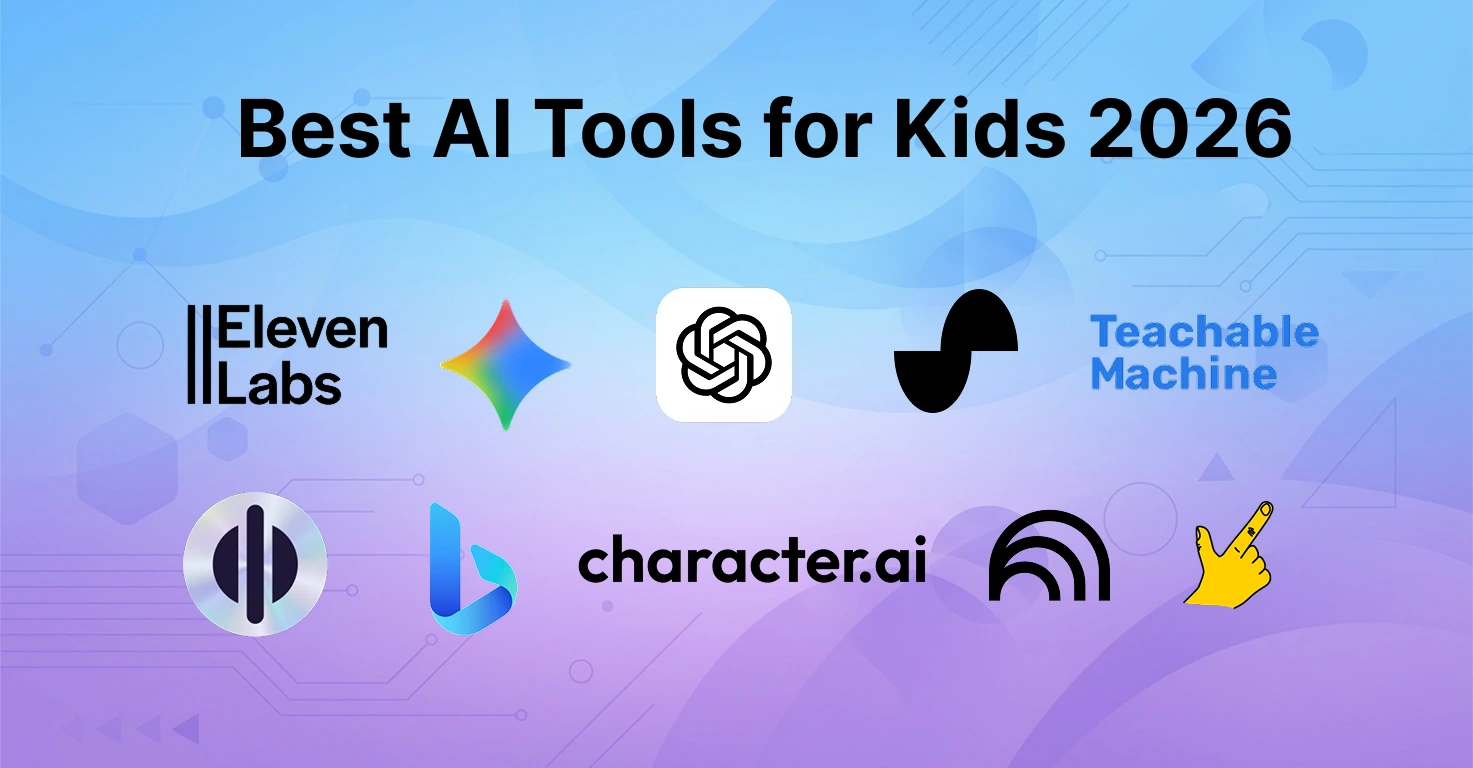
ON THIS PAGE
Subscribe To Get Weekly Family AI Discoveries

Every parent has felt it: your child's halfway through an AI project, eyes lit up with excitement, and then - "You've reached your daily limit. Upgrade for $20/month."
We've tested dozens of AI tools with our three kids (ages 3, 6, and 8) to separate the genuinely free from the freemium traps. This guide gives you the honest breakdown so you can plan projects that won't hit a paywall mid-creation.
For our younger kids (3 and 6), we use parent accounts and sit with them during sessions. The 13+ age requirements you'll see are terms of service, not difficulty ratings - a 5-year-old can absolutely enjoy Bing Image Creator with a parent driving.
We've split this into two categories: tools that are completely free (no catches), and freemium tools with genuinely generous limits that won't leave your child frustrated. Plus an honest breakdown of what restrictions you'll actually hit.
What you'll need
- Device with internet access (tablet, computer, or phone)
- Parent supervision for account setup (most tools require 13+)
- Microsoft account (for Bing Image Creator) or Google account (for Teachable Machine, NotebookLM, Gemini)
- Curiosity and creativity—no subscription required!
Not sure which tool is right for your child?
Take our free 2-minute quiz and get personalized AI tool recommendations based on your child's age and interests.
Section 1: Completely Free AI Tools (No Catch)
These tools cost nothing, require no credit card, and won't cut your child off mid-project. They're backed by Google or Microsoft, which means they're subsidised by larger business models rather than trying to upsell you.
Quick Draw (Ages 5+)
Google's Quick Draw is a delightful introduction to how AI "sees" the world. Your child draws something in 20 seconds while a neural network tries to guess what it is. It's simple, addictive, and completely free with unlimited plays.
Why kids love it: The AI's guesses are often hilariously wrong, which teaches them that AI isn't magic—it learns from patterns and makes mistakes.
Best for: First AI experience, understanding machine learning concepts, quick brain breaks between homework.
Teachable Machine (Ages 8+)
Google's Teachable Machine lets kids train their own AI model using their webcam, microphone, or uploaded images. No coding required. Your child can teach a computer to recognise their hand gestures, identify family members, or sort objects by colour.
Real project idea: Our 8-year-old trained a model to recognise different LEGO brick types. Now he's planning a "LEGO sorter" for his room (we'll see if that actually happens).
Best for: Understanding how AI learns, STEM projects, science fair demonstrations.
NotebookLM (Ages 13+)
Google's NotebookLM is a study companion that reads documents and answers questions about them. Upload a textbook chapter, research paper, or novel, and it becomes a personalised tutor. The standout feature is Audio Overview—it generates a podcast-style discussion about your documents.
Why teens love it: It's like having a study buddy who's actually read all the material. The AI podcast feature makes revision less boring.
Best for: Essay research, exam revision, understanding complex topics, book analysis.
Bing Image Creator (Ages 13+)
Microsoft's Bing Image Creator runs on DALL-E 3 (the same model behind ChatGPT's image generation) and is genuinely free. You get 15 "boosts" for fast generation, then unlimited slower generations. With a Microsoft account, there's no hard daily cap.
The honest bit: Slower generations take 1-2 minutes instead of seconds. For most family projects, this isn't a problem.
Best for: Story illustrations, creative writing projects, visual brainstorming.
Section 2: Best Free Tiers (Genuinely Generous)
These tools have paid plans, but their free tiers are generous enough for real family projects. We're talking 50+ daily uses—not the "3 free tries then upgrade" nonsense.
ChatGPT Free (Ages 13+)
OpenAI's ChatGPT free tier has improved dramatically. You now get GPT-4o access (their smartest model), 15 minutes of voice conversation daily, 2-3 AI image generations per day, and unlimited text conversations.
2026 update: ChatGPT now has dedicated parental controls. You can disable voice mode, image generation, and memory features for family accounts.
What you'll hit: Image generation runs out fast if your child wants multiple variations. Voice mode's 15-minute limit is tight for longer projects.
Best for: Homework help, creative writing, explaining concepts, brainstorming.
Playground AI (Ages 13+)
Playground AI offers 50 free image generations per day—that's genuinely generous. You get a canvas editor for combining and editing images, commercial usage rights, and access to multiple AI models.
Why we rate it: 50 images daily means kids can experiment, make mistakes, and iterate without worrying about limits. The canvas feature is great for creating comic strips or story sequences.
Best for: Digital art projects, comic creation, game asset design.
Character.AI (Ages 13+)
Character.AI lets kids chat with AI versions of historical figures, fictional characters, or custom personas. The free tier is unlimited for text conversations, making it fantastic for roleplay-based learning.
Educational win: Our 8-year-old "interviewed" a pirate character for a school project on the Golden Age of Piracy. He was engaged for 45 minutes straight.
What you'll hit: The free tier occasionally has wait times during peak hours. No voice features without the paid plan.
Best for: Creative writing, history projects, language practice, character development.
Suno AI (Ages 8+)
Suno creates full songs from text prompts—lyrics, vocals, instrumentation, everything. The free tier gives you 10 songs per day with 5 credits refreshing daily.
Family favourite: Birthday songs. We've made personalised birthday songs for grandparents, friends, even the dog. The AI handles surprisingly complex requests.
What you'll hit: 10 songs sounds like a lot, but kids iterate fast. "Can we make it faster? Now slower? What about rock instead of pop?" burns through credits quickly.
Best for: Music creation, multimedia projects, celebrations, learning song structure.
Google Gemini (Ages 13+)
Google Gemini is Google's answer to ChatGPT. The free tier includes their latest Gemini 2.0 Flash model, unlimited text conversations, and integration with Google Workspace.
Advantage over ChatGPT: Deep integration with Google Docs, Sheets, and Gmail. For families already in the Google ecosystem, this is convenient.
What you'll hit: Image generation has tighter limits than dedicated image tools. The AI occasionally refuses requests that ChatGPT handles fine.
Best for: Research, writing assistance, Google Workspace projects.
ElevenLabs (Ages 13+)
ElevenLabs offers text-to-speech that sounds genuinely human. The free tier gives you 10,000 characters per month (roughly 10 minutes of audio) with access to their voice library.
Creative application: Our kids use it to voice their written stories. Hearing their words spoken aloud in different character voices is magical for them.
What you'll hit: 10,000 characters monthly is tight for regular use. One longer story can use half your allowance. Voice cloning requires paid plans.
Best for: Audiobook creation, story narration, language learning, accessibility.
Our Verdict
You don't need to pay for AI tools to give your kids meaningful experiences with the technology. The completely free tools (Quick Draw, Teachable Machine, NotebookLM, Bing Image Creator) offer unlimited access with no catches.
For more advanced projects, ChatGPT and Playground AI have free tiers generous enough that most kids won't hit limits in a single session.
The key is setting expectations. If you're planning a project that needs 50 image generations or a full audiobook, check the limits first. Nothing kills creative momentum faster than a paywall mid-project.
The Honest "What You'll Hit"
Let's be real about limits. Here's exactly what restrictions you'll encounter:
Completely Free (No Limits)
- Quick Draw: Unlimited plays, no catch
- Teachable Machine: Unlimited projects, no catch
- NotebookLM: Unlimited uploads, 50 sources per notebook
- Bing Image Creator: Unlimited slow generations, fast boosts run out
Freemium (Generous Tiers)
- ChatGPT: ~Unlimited text, 2-3 images/day, 15 min voice
- Playground AI: 50 images/day (rarely hit in one session)
- Character.AI: Unlimited chat, peak hour waits
- Suno: 10 songs/day (rapid iteration burns through)
- Gemini: Unlimited text, limited images
- ElevenLabs: 10k chars/month (second project hits limit)
Common Frustrations to Avoid
- "My child hit the limit in 5 minutes" — This usually means the tool has a stingy free tier. Avoid: most AI avatar generators, Midjourney (no free tier), Runway (5 generations).
- "It asked for a credit card" — Tools that require payment info upfront often have worse free tiers. The tools above don't ask.
- "The free version has a watermark" — Some image tools (Leonardo, Canva) add watermarks. The tools above don't.
Family Project Ideas Using Only Free Tools
- The "How AI Sees" Project (Ages 5+): Start with Quick Draw, then move to Teachable Machine. Kids learn that AI makes mistakes and improves with training data. Total cost: £0.
- Create a Story with Illustrations (Ages 8+): Write with ChatGPT, generate images with Bing Image Creator, narrate with ElevenLabs. Spread ElevenLabs across multiple days if the story is long.
- Study Buddy Setup (Ages 13+): Upload school materials to NotebookLM. Use Audio Overview for revision podcasts. Supplement with Gemini for questions.
- Birthday Song Factory (Ages 8+): Use Suno to create personalised songs for family occasions. 10 songs per day is plenty for most celebrations.
Free Tools in Action
Want to see what's possible without spending anything? This project uses only the completely free tools mentioned above:
- Personalized School Stories — We used Gemini (free) to create custom storybooks that helped our 3-year-old with first-day anxiety. Total cost: £0.
We're working on more projects that stay within free limits. Most of our current tutorials use tools with generous free tiers but eventual paid features.
Safety Guidelines for Free AI Tools
- Age requirements: Most tools require users to be 13+. For younger children, use parent-controlled accounts and supervise all sessions.
- Account management: Use family accounts where possible. ChatGPT now offers dedicated parental controls.
- Content preview: Always review AI-generated images and text before sharing, especially with younger children.
- Education approach: Discuss how AI works honestly—it's a tool that makes mistakes, not magic.
- Time management: Set reasonable limits. The "free" aspect can make it easy to lose track of time.
If a Tool Stops Working
- Daily limit reached: Most freemium tools reset at midnight. Plan projects accordingly or switch to a completely free alternative.
- Slow generation: Bing Image Creator's slow mode is intentional, not a bug. Wait 1-2 minutes per image.
- Account issues: Some tools require age verification. Use a parent account rather than creating accounts for children.